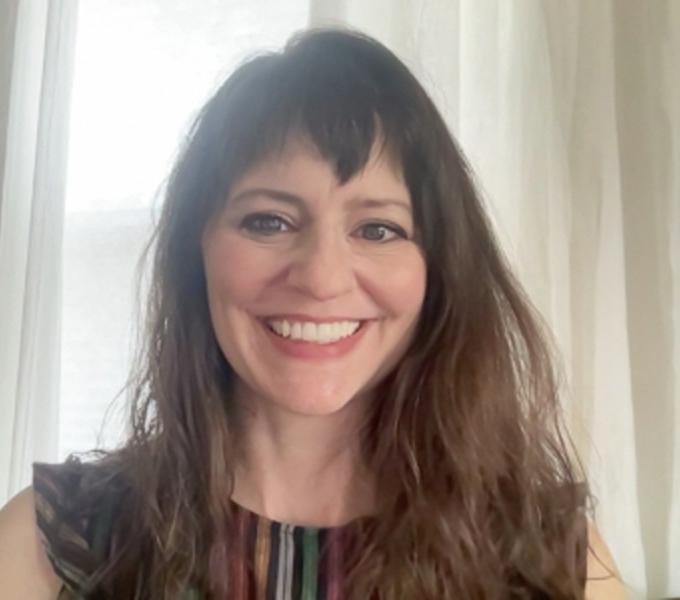
As Teaching Assistant Professor, Studio Coordinator, and Architectural Studies Advisor, I work closely with our majors and minors across many fronts as they begin their architecture careers at Pitt. I oversee many aspects of the Architectural Studies Program, including managing our unique studio spaces. I also work with our community and university partners to develop new coursework or enhance our existing course offerings. Recently, our program has collaborated with Urban Academy in Larimer, the Swanson School of Engineering, Pitt Makerspace in Benedum Hall, the Global Hub in Posvar Hall, the Carnegie Museum of Art, the Center of Life in Hazelwood, and a diverse group of local building professionals. Currently, my colleagues and I are partnering with Riverlife, a nonprofit organization that works on the development of Pittsburgh's waterfronts. I teach several studio courses each academic year. Recently, I have taught Foundations, Design Studio 1, Design Studio 2, Design Studio 3, and the NOCMAT Design-Build Course.
In 2018, I completed my dissertation “The Physiognomy of a Collection: Architectural Legibility and Historical Expression at the Musée des monuments français, 1795-1816.” The dissertation maps the emergence and impact of Alexandre Lenoir’s system of art and architectural classification at the Musée des monuments français and questions the subjectivity of emergent methods of art historical classification based on scientific taxonomy, physiognomy, object histories, and myth. My recent research concerns contemporary tourism on former large-scale labor sites, including Pennsylvania coal towns and Cuban sugar mills. I examine the architectural design and contemporary tourism industry surrounding nineteenth-century Cuban sugar mills as systems of control and propose alternative landscapes of resistance through the careful study of historical texts, architectural landscapes, objects, and legends. During the pandemic, I took up hiking and discovered that many recreational sites were formerly massive industrial landscapes. This inspired me to begin researching the cultural legacy and environmental impact of abandoned industrial sites in rural Pennsylvania.
Before coming to the University of Pittsburgh, I worked in architectural offices in Cleveland, Ohio and Boston, Massachusetts. I contributed to a diverse range of architectural work, including historic preservation, multi-family housing, and adaptive reuse projects. My most notable projects were restorations of abandoned or at-risk early-twentieth-century housing projects in Cleveland, Ohio with LDA Architects and the Cuyahoga Metropolitan Housing Authority (CMHA). We restored Woodhill Homes Community Center and a WPA mural at the center of Woodhill Homes Estate, a New Deal-era public housing project. We also modernized all of the residential units at Lakeview Terrace, an important modernist public housing project on Lake Erie. My work in Cleveland integrated community engagement, historic preservation, and urban design.
- PhD, History of Art and Architecture, University of Pittsburgh
- MA, History of Art and Architecture, University of Pittsburgh
- MARCH, Miami University
- BA in Architecture, Miami University
- Registered Architect, Ohio and Pennsylvania
- Member, American Institute of Architects
- LEED AP BD+C
Education & Training
“The Ceiba and the Watchtower: Landscapes of Power and Resistance in Cuba’s Valle de los Ingenios” in Architectures of Slavery: Ruins and Reconstructions, ed. Nathaniel Walker and Rachel Ama Assa Engmann, Univ. of Virginia Press, 2025
“Myth, Modernity, and Mass Housing: The Development of Public Housing in Depression-era Cleveland.” Traditional Dwellings and Settlements Review, 25, no 1 (2013): 45-68.
Recent Conference Talks
“From Grist Mills to Ghost Towns: The Rural Legacy of Pittsburgh’s Industrial Landscapes”. SAH 75th Annual International Conference, Pittsburgh, PA